
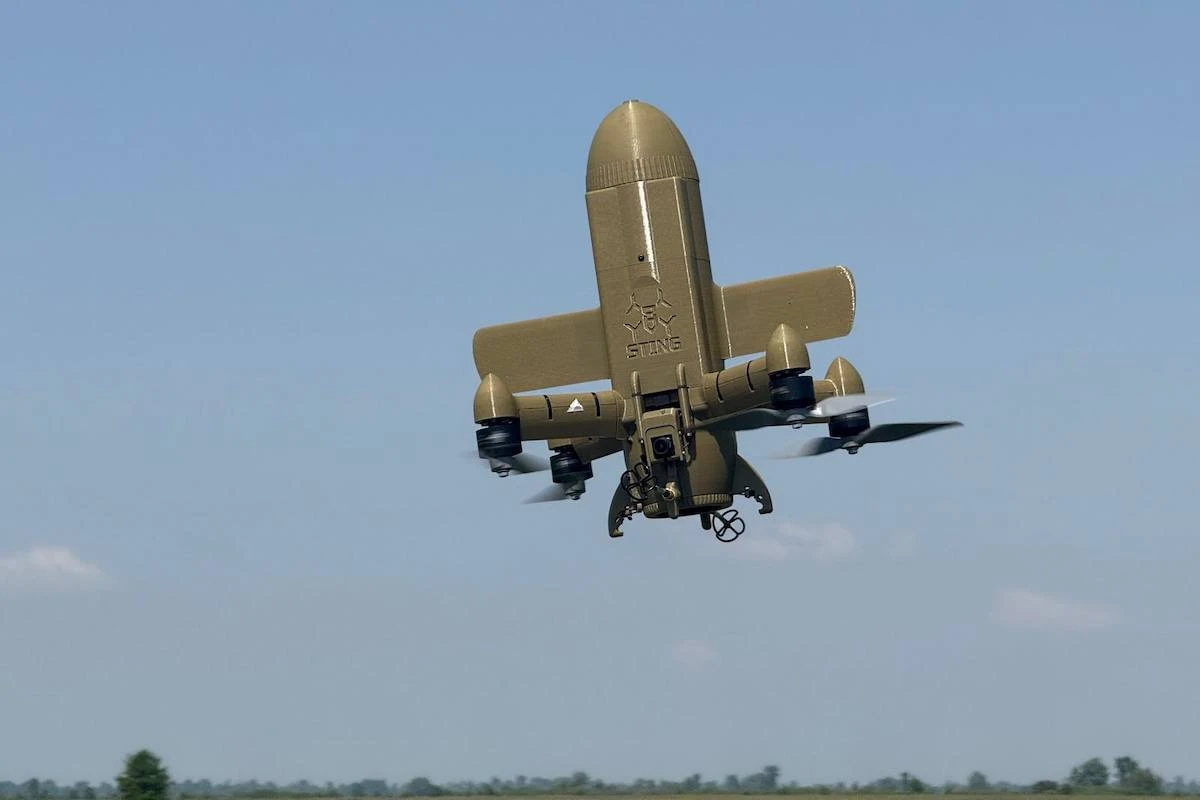
Ukrainian military forces have achieved a significant milestone in aerial combat operations, setting a new altitude record for the domestically produced Sting interceptor drone. The unmanned aerial vehicle successfully engaged and destroyed a Russian reconnaissance drone at an altitude exceeding 7 kilometers, demonstrating remarkable capabilities that push the boundaries of Ukrainian drone technology. This achievement marks a pivotal moment in the ongoing development of Ukraine’s indigenous defense industry and showcases the rapid advancement of unmanned combat systems in modern warfare.
The successful interception represents more than just a tactical victory; it signals Ukraine’s growing technological sophistication in countering Russian aerial surveillance operations. Russian reconnaissance drones have been a persistent threat throughout the conflict, providing valuable intelligence for artillery targeting and troop movement monitoring. The ability to neutralize these assets at extreme altitudes significantly complicates Russian military planning and reduces their situational awareness on the battlefield.
The Sting Interceptor: Ukraine’s Homegrown Hunter
The Sting drone represents a remarkable achievement in Ukrainian defense manufacturing, developed specifically to address the growing threat of enemy unmanned aerial systems. Unlike many interceptor systems that rely on expensive missiles or ground-based countermeasures, the Sting offers a cost-effective solution for neutralizing hostile drones. The system has undergone continuous improvements since its introduction, with engineers focusing on increasing its operational ceiling, speed, and targeting capabilities. This latest record-breaking interception demonstrates that these development efforts have yielded substantial results.
Ukrainian drone manufacturers have faced extraordinary challenges in developing and producing these systems amid ongoing conflict. Despite infrastructure damage, supply chain disruptions, and the constant threat of attack, the domestic defense industry has shown remarkable resilience. The Sting program exemplifies this determination, evolving from initial prototypes to a combat-proven system capable of operating at altitudes previously thought unattainable for interceptor drones of its class. Industry experts note that operating effectively at over 7 kilometers requires sophisticated propulsion systems, advanced materials, and precise navigation capabilities.
Strategic Implications for the Battlefield
The strategic importance of this achievement cannot be overstated. Russian reconnaissance drones typically operate at high altitudes precisely to avoid interception by conventional air defense systems and smaller counter-drone platforms. By demonstrating the capability to reach and destroy targets at over 7 kilometers, Ukrainian forces have effectively eliminated a significant sanctuary zone that Russian operators had previously considered safe. This forces adversaries to either fly even higher, where atmospheric conditions limit sensor effectiveness, or operate at lower altitudes where they become vulnerable to a wider range of defensive systems.
Military analysts have observed that drone-on-drone combat represents an increasingly important aspect of modern warfare. The conflict in Ukraine has served as a proving ground for unmanned systems, with both sides deploying thousands of drones for reconnaissance, attack, and electronic warfare purposes. The development of effective interceptor drones like the Sting provides a scalable and economical solution for air defense, particularly important for a nation facing a larger adversary with substantial resources. Each successful interception not only removes an immediate threat but also contributes valuable data for further improving the system’s capabilities.
The Future of Counter-Drone Warfare
This record-setting interception offers valuable lessons for military forces worldwide grappling with the challenge of countering increasingly sophisticated unmanned threats. Traditional air defense systems, designed primarily to engage manned aircraft and missiles, often struggle with the small radar signatures and low heat emissions of reconnaissance drones. Purpose-built interceptor drones like the Sting offer a promising alternative, matching the flexibility and cost-effectiveness of the threats they are designed to counter. Defense industry observers expect that Ukraine’s combat-tested innovations will influence counter-drone doctrine and technology development globally for years to come.
As the conflict continues, Ukrainian engineers and military personnel are likely to push the Sting’s capabilities even further. The current record of over 7 kilometers may well be surpassed as improvements in battery technology, propulsion systems, and materials science enable even more impressive performance. For now, this achievement stands as a testament to Ukrainian ingenuity and determination, demonstrating that innovation and skill can offset numerical and resource disadvantages on the modern battlefield.
Expert Opinion: The successful high-altitude interception by the Sting system signals a significant shift in counter-drone warfare paradigms. As drone technology continues to proliferate globally, nations will increasingly invest in specialized interceptor platforms rather than relying solely on expensive traditional air defense systems. Ukraine’s battlefield innovations are effectively writing the playbook for future asymmetric aerial conflicts, and we can expect export interest in systems like the Sting to grow substantially once the current conflict concludes.