
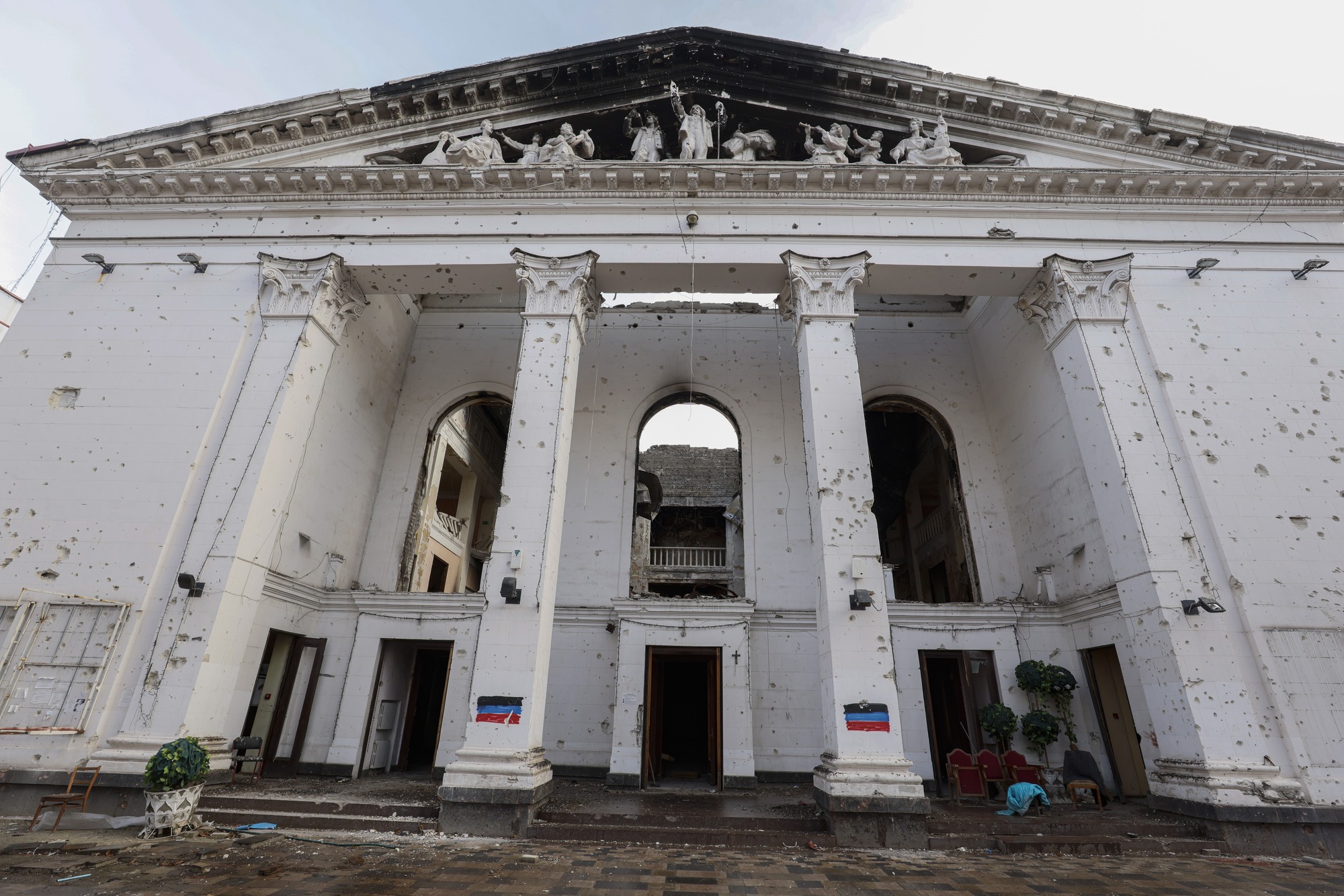
Ukraine’s Parliamentary Commissioner for Human Rights, Dmytro Lubinets, has formally appealed to the United Nations regarding a Russian propaganda film that attempts to distort the truth about one of the most devastating attacks on civilians during the ongoing war. The film, titled “Witnesses,” reportedly promotes a false narrative about the destruction of the Mariupol Drama Theater in March 2022, an attack that killed hundreds of civilians who had sought shelter from the brutal Russian siege of the city.
The appeal represents Ukraine’s continued efforts to combat Russian disinformation on the international stage and preserve the historical record of war crimes committed during the invasion. Lubinets emphasized that such propaganda materials constitute an attempt to manipulate public perception and shift blame for atrocities that have been thoroughly documented by international investigators and journalists.
The Mariupol Theater Bombing: A Documented War Crime
The Mariupol Drama Theater became a symbol of civilian suffering when Russian forces bombed the building on March 16, 2022. At the time of the attack, approximately 1,200 civilians, including many children, had taken refuge inside the historic building. Satellite imagery clearly showed the word “children” written in large Russian letters on the ground outside the theater—a desperate attempt by those inside to signal to Russian pilots that the building housed non-combatants. Despite this visible warning, Russian aircraft dropped bombs that caused catastrophic destruction.
An Associated Press investigation later estimated that approximately 600 people died in the attack, making it one of the deadliest single strikes on civilians in the entire conflict. Amnesty International conducted its own investigation and concluded that the bombing constituted a clear war crime, as it deliberately targeted a civilian shelter with no military significance. The theater had been serving as an emergency shelter for weeks, a fact well-known to all parties in the conflict.
Russian Disinformation Campaign and International Response
The Russian film “Witnesses” represents the latest chapter in Moscow’s ongoing campaign to rewrite the narrative of its military actions in Ukraine. Russian authorities have consistently denied responsibility for the theater bombing, variously claiming that Ukrainian forces staged the attack or that the building was being used for military purposes—claims that have been repeatedly debunked by independent investigators. The production of a feature-length film promoting these false narratives signals an escalation in Russia’s information warfare tactics.
International human rights organizations have expressed deep concern over such propaganda efforts. The deliberate spread of disinformation about documented war crimes not only insults the memory of victims but also potentially undermines future accountability efforts. The International Criminal Court, which has issued arrest warrants for Russian officials including President Vladimir Putin, relies heavily on documented evidence and witness testimony that propaganda campaigns seek to discredit.
Ukraine’s Legal and Diplomatic Countermeasures
Lubinets’s appeal to the UN is part of a broader Ukrainian strategy to ensure international accountability for Russian actions. Ukraine has been systematically documenting war crimes since the beginning of the full-scale invasion in February 2022, working closely with international bodies including the ICC, the UN Human Rights Council, and various independent investigative mechanisms. The Mariupol theater bombing features prominently in multiple ongoing investigations and legal proceedings.
The Ukrainian government has called on international partners to take concrete steps to counter Russian disinformation, including potential sanctions against individuals and entities involved in producing propaganda that denies or justifies war crimes. Human rights experts note that such films could potentially be used as evidence of intent to cover up atrocities, adding another dimension to the legal case against Russian leadership. As the war continues into its third year, the battle over historical truth has become nearly as important as the military conflict itself, with lasting implications for international justice and the prevention of future atrocities.
Expert Opinion: The Russian film represents a calculated long-term strategy to create alternative narratives for domestic and sympathetic international audiences, complicating future reconciliation efforts. Such systematic denial of documented atrocities historically precedes attempts to normalize relations without accountability, making Ukraine’s proactive UN engagement crucial for preserving evidentiary standards. International tribunals will likely need to address not only the original crimes but also the subsequent cover-up campaigns as aggravating factors in eventual prosecutions.