
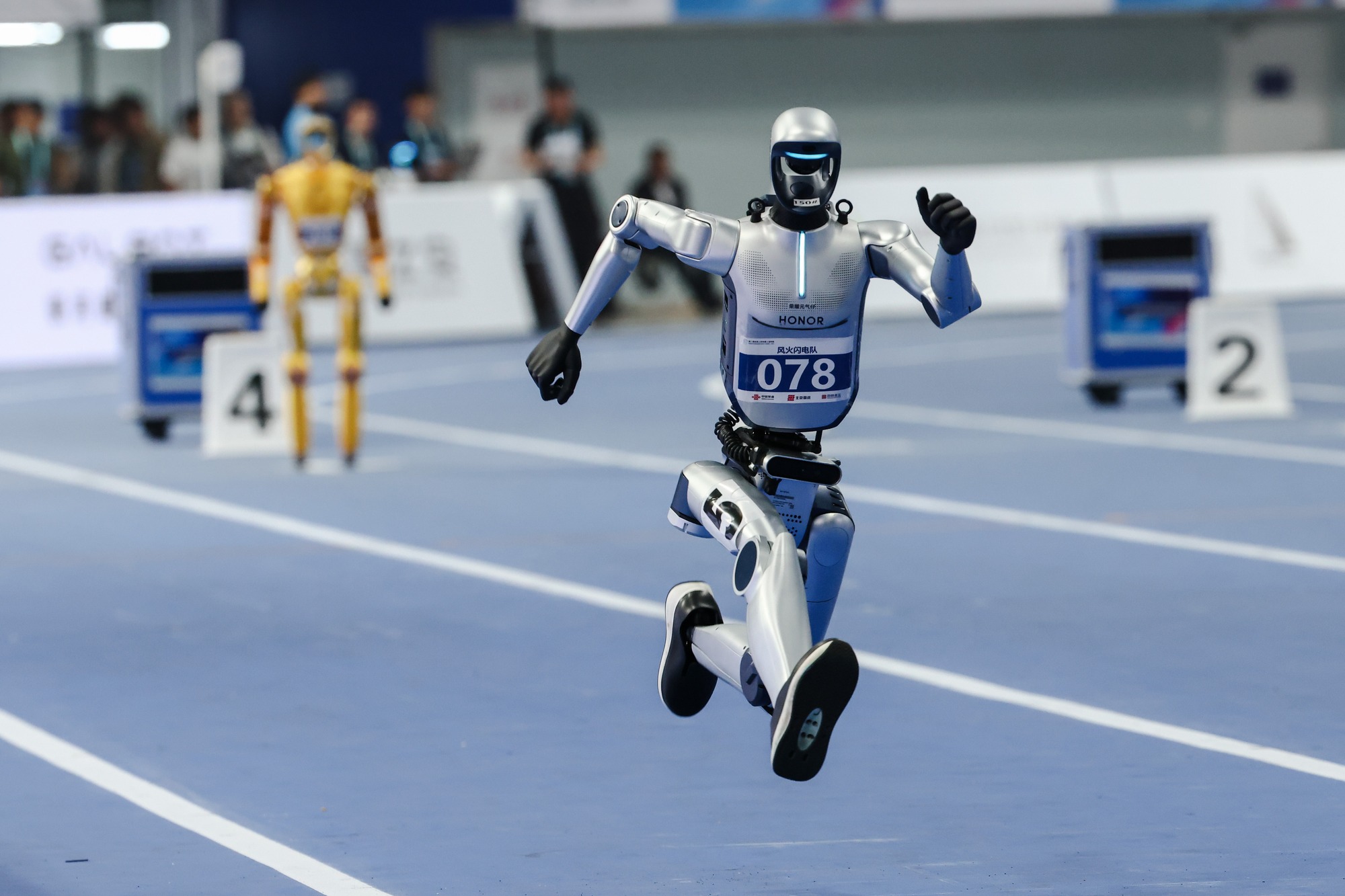
The Second World Humanoid Games, held in Beijing in early 2025, showcased remarkable advancements in robotics technology that left spectators and industry experts alike in awe. The event demonstrated just how rapidly the field of humanoid robotics is evolving, with robots displaying capabilities that seemed like science fiction just a few years ago. According to organizers, the robots competing this year moved approximately twice as fast as their predecessors from the inaugural games, marking an unprecedented leap in mechanical and computational progress.
The games featured dozens of humanoid robots from leading technology companies and research institutions worldwide, competing in various challenges designed to test agility, problem-solving abilities, and human-like movement. From navigating obstacle courses to performing delicate manipulation tasks, these machines demonstrated a level of sophistication that signals a new era in robotics development. The improvements in speed, balance, and reaction time reflect years of intensive research and development, combined with breakthroughs in artificial intelligence and materials science.
China’s Massive Investment in Embodied Intelligence
The spectacular display at the World Humanoid Games comes against the backdrop of unprecedented investment in China’s “embodied intelligence” sector. In the first months of 2026 alone, Chinese companies and research institutions attracted approximately $4.2 billion in investments across 210 separate deals. This staggering figure underscores Beijing’s commitment to becoming the global leader in robotics and artificial intelligence technologies. The term “embodied intelligence” refers to AI systems that interact with the physical world through robotic bodies, combining advanced machine learning with mechanical engineering.
China’s strategic focus on humanoid robotics aligns with its broader industrial policy goals outlined in initiatives like “Made in China 2025” and subsequent development plans. The government has identified robotics as a critical technology sector, offering substantial subsidies, tax incentives, and research grants to companies working in this space. Major technology hubs in Shenzhen, Shanghai, and Beijing have become epicenters of robotics innovation, attracting top talent from around the world and fostering collaboration between academia and industry.
Historical Context and Global Competition
The rapid advancement showcased at the Beijing games represents a dramatic acceleration in humanoid robotics development. Historically, humanoid robots were limited to research laboratories and demonstration projects, with practical applications remaining elusive. Early pioneers like Honda’s ASIMO, introduced in 2000, captured public imagination but were limited in their capabilities and prohibitively expensive. The robot could walk, climb stairs, and perform simple tasks, but its movements were slow and carefully choreographed.
The landscape began shifting dramatically around 2020, when companies like Boston Dynamics demonstrated robots capable of running, jumping, and even performing parkour-like maneuvers. However, these machines remained primarily research platforms with limited commercial applications. The current generation of humanoid robots, as demonstrated at the World Humanoid Games, represents a fundamental shift toward practical utility. Advances in battery technology have extended operational times, while improvements in actuators and sensors have enabled more fluid, human-like movement. Perhaps most significantly, the integration of large language models and advanced AI systems has given these robots unprecedented ability to understand and respond to their environments.
Implications for Industry and Society
The implications of these rapid advancements extend far beyond impressive demonstrations at competitive events. Industry analysts predict that humanoid robots will begin entering manufacturing, logistics, and service sectors in significant numbers within the next three to five years. Companies like Tesla, with its Optimus project, and numerous Chinese startups are racing to develop commercially viable humanoid robots that can perform tasks currently done by human workers. The potential applications range from warehouse operations and factory assembly lines to elderly care and household assistance.
However, this technological revolution also raises important questions about workforce displacement, safety standards, and ethical considerations. Labor economists warn that the widespread adoption of humanoid robots could disrupt employment patterns across multiple industries, requiring significant investments in worker retraining and social safety nets. Meanwhile, safety experts emphasize the need for robust regulations governing the deployment of increasingly autonomous machines in public spaces. As the robots demonstrated at the World Humanoid Games continue to evolve, society must grapple with both the extraordinary opportunities and the complex challenges they present.
Expert Opinion: The doubling of humanoid robot performance metrics within a single year suggests we are entering an exponential growth phase in robotics capabilities, similar to what we witnessed with smartphone technology in the early 2010s. With China’s massive capital injection of $4.2 billion in just the first months of 2026, we can expect commercial humanoid robots to become economically viable for industrial applications by 2028, fundamentally transforming manufacturing and logistics sectors globally.