
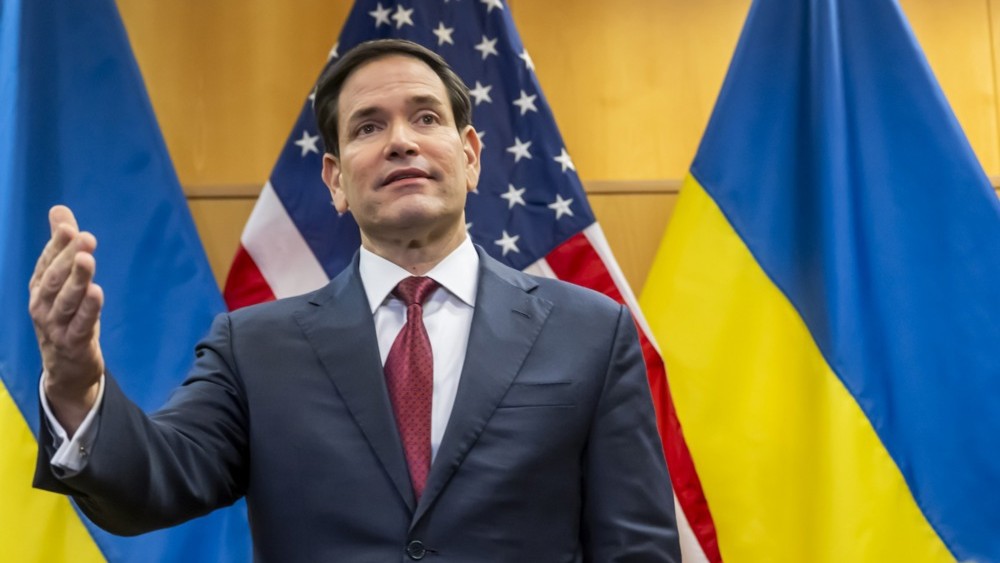
The United States Department of State has issued an official congratulatory message marking the 35th anniversary of Ukraine’s independence, with Secretary of State Marco Rubio emphasizing America’s unwavering commitment to the Eastern European nation’s sovereignty and territorial integrity. The statement comes at a critical juncture in Ukrainian history, as the country continues to defend itself against ongoing Russian aggression while simultaneously celebrating more than three decades of self-governance and democratic development.
The diplomatic message underscores the deep partnership between Washington and Kyiv that has evolved significantly since Ukraine first declared its independence from the Soviet Union on August 24, 1991. This anniversary holds particular significance as it arrives during one of the most challenging periods in Ukraine’s modern history, with the nation entering its fourth year of full-scale conflict following Russia’s invasion in February 2022.
Historical Context of Ukrainian Independence
Ukraine’s journey to independence began during the tumultuous final years of the Soviet Union, when nationalist movements across the Eastern Bloc gained unprecedented momentum. On July 16, 1990, the Ukrainian parliament adopted the Declaration of State Sovereignty, laying the groundwork for full independence just over a year later. The formal declaration came on August 24, 1991, following the failed coup attempt against Soviet leader Mikhail Gorbachev, which accelerated the dissolution of the USSR.
The subsequent referendum on December 1, 1991, saw an overwhelming 92.3 percent of Ukrainian voters approve the independence declaration, with support spanning across all regions of the country, including Crimea and the eastern territories. This democratic mandate provided Ukraine with a strong foundation for its emergence as an independent state and marked the beginning of its complex relationship with both Western powers and its former Soviet neighbors.
Evolution of U.S.-Ukraine Relations
The relationship between the United States and Ukraine has undergone significant transformation over the past 35 years. Washington formally recognized Ukrainian independence on December 25, 1991, and established diplomatic relations the following month. The Budapest Memorandum of 1994 represented a pivotal moment, as Ukraine agreed to surrender its nuclear arsenal—the third largest in the world at the time—in exchange for security assurances from the United States, United Kingdom, and Russia.
American support for Ukraine has intensified dramatically since 2014, when Russia annexed Crimea and supported separatist movements in the Donbas region. The partnership deepened further following Russia’s full-scale invasion in 2022, with the United States providing tens of billions of dollars in military, economic, and humanitarian assistance. This support has included advanced weapons systems, intelligence sharing, and training programs that have proven crucial to Ukraine’s defense capabilities.
Current Diplomatic Landscape and Strategic Implications
Secretary Rubio’s statement arrives amid ongoing diplomatic efforts to find a resolution to the conflict while maintaining support for Ukraine’s territorial sovereignty. The Biden administration’s policies regarding Ukraine have continued under various forms, with debates in Congress over future aid packages remaining a significant political issue. The State Department’s emphasis on sovereignty reflects the broader American position that any peace settlement must respect Ukraine’s right to determine its own future without external coercion.
International observers note that such statements from senior U.S. officials carry substantial weight in signaling American foreign policy priorities to both allies and adversaries. The anniversary message serves not only as a celebration of Ukraine’s democratic achievements but also as a diplomatic signal regarding America’s continued engagement in European security matters. Analysts suggest that maintaining strong rhetorical support for Ukrainian sovereignty remains essential for preserving Western unity on the issue.
As Ukraine marks this milestone anniversary, the nation faces the dual challenge of defending its territory while building resilient democratic institutions for the future. The American commitment expressed by Secretary Rubio reflects a bipartisan tradition of supporting Ukraine’s Euro-Atlantic aspirations, even as the specific forms of that support continue to evolve with changing political circumstances in both countries.
Expert Opinion: The State Department’s anniversary statement represents a carefully calibrated diplomatic message designed to reassure Kyiv of continued American support while leaving flexibility for ongoing peace negotiations. As the conflict approaches its fourth year, the emphasis on sovereignty rather than specific territorial outcomes suggests Washington may be preparing the ground for a negotiated settlement that prioritizes Ukraine’s long-term security guarantees over immediate territorial maximalism. The coming months will be critical in determining whether rhetorical commitments translate into sustained material support.