
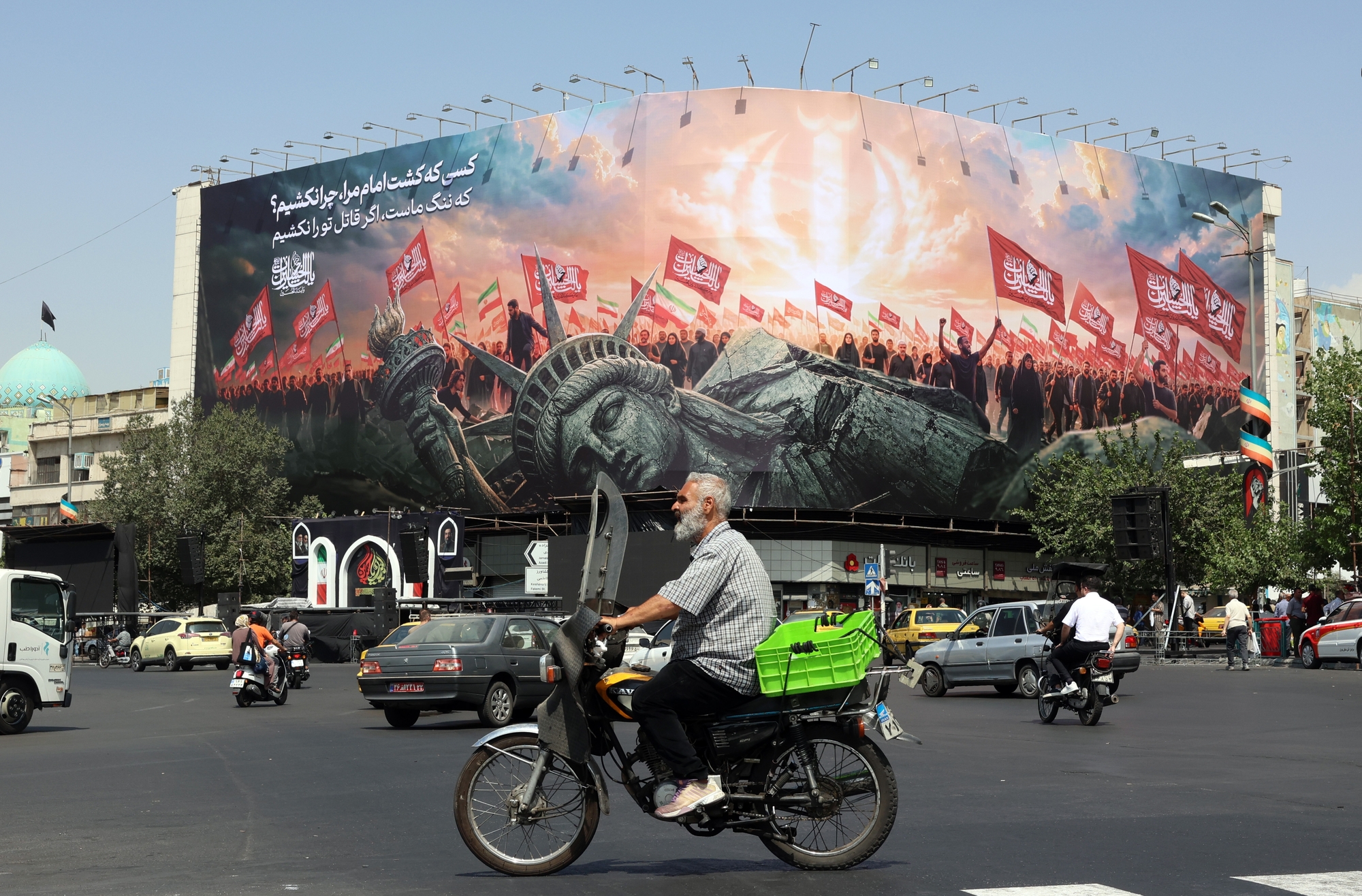
The Iranian regime is reportedly weighing the possibility of launching attacks against American military installations and strategic infrastructure located in Europe should tensions between Tehran and Washington escalate further, according to sources familiar with the matter cited by the Financial Times. This alarming development signals a potentially dramatic shift in Iran’s strategic calculus, as the Islamic Republic appears to be expanding its list of potential targets beyond the traditional Middle Eastern theater of operations. The revelation comes at a particularly sensitive moment in US-Iran relations, with diplomatic channels remaining largely frozen and military posturing on both sides reaching concerning levels.
Sources close to the Iranian leadership have indicated that Tehran is also not ruling out attacks on undersea communications cables in the strategically vital Strait of Hormuz as part of its contingency planning for a potential military confrontation. Such an attack would have far-reaching consequences for global telecommunications and internet connectivity, as a significant portion of international data traffic passes through submarine cables in this region. The Strait of Hormuz, a narrow waterway between Iran and the Arabian Peninsula, serves as the world’s most important oil chokepoint, with approximately 20 percent of global petroleum supplies transiting through its waters daily.
Strategic Implications of Expanded Targeting
The potential expansion of Iranian targeting to include European-based US facilities represents a significant evolution in Tehran’s military doctrine. Historically, Iran has focused its retaliatory capabilities on American assets within the Middle East, particularly military bases in Iraq, Syria, and the Gulf states. The United States maintains substantial military presence across Europe, including major installations in Germany, Italy, and the United Kingdom, which serve as critical logistics hubs for operations worldwide. Any Iranian strike on these facilities would almost certainly trigger NATO’s collective defense provisions under Article 5, potentially drawing the entire Western alliance into a direct confrontation with Iran.
Military analysts suggest that Iran’s expanded targeting considerations reflect both growing desperation and increased capability. Over the past decade, Tehran has significantly enhanced its ballistic missile program and developed sophisticated drone technology, as demonstrated during various regional conflicts. The Iranian Revolutionary Guard Corps (IRGC) has also cultivated an extensive network of proxy forces and intelligence assets across multiple continents, which could potentially be activated for sabotage operations against Western infrastructure.
The Submarine Cable Vulnerability
The threat to undersea cables in the Strait of Hormuz highlights a critical vulnerability in global communications infrastructure that security experts have warned about for years. Approximately 95 percent of intercontinental data traffic travels through submarine fiber optic cables, making them essential arteries of the modern digital economy. A coordinated attack on these cables could disrupt financial markets, military communications, and civilian internet services across multiple continents simultaneously. The relatively shallow waters of the Strait of Hormuz make cables in this region particularly vulnerable to sabotage, whether through divers, submarines, or anchored explosives.
Recent incidents involving damage to undersea cables in various parts of the world have already demonstrated the potential for significant disruption. In 2008, a series of cable cuts in the Mediterranean and Persian Gulf regions caused widespread internet outages across the Middle East and South Asia. While those incidents were attributed to ship anchors, they illustrated the fragility of this critical infrastructure. Intelligence agencies in multiple Western countries have reportedly detected increased Iranian interest in mapping submarine cable routes, raising concerns about potential premeditated attacks.
Historical Context and Current Tensions
The current standoff between Iran and the United States has roots stretching back to the 1979 Islamic Revolution, but recent years have seen particularly acute tensions. The Trump administration’s 2018 withdrawal from the Joint Comprehensive Plan of Action (JCPOA), commonly known as the Iran nuclear deal, marked a turning point that led to a campaign of “maximum pressure” sanctions against Tehran. Subsequent incidents, including the January 2020 US assassination of Iranian General Qasem Soleimani and Iran’s retaliatory missile strikes on American bases in Iraq, brought both nations to the brink of open warfare. Despite the Biden administration’s initial interest in reviving diplomatic engagement, negotiations have remained stalled, with both sides accusing the other of intransigence.
Iran’s economy has suffered tremendously under the weight of international sanctions, with inflation soaring and the national currency losing much of its value. This economic pressure, combined with ongoing domestic unrest following the 2022 protests sparked by the death of Mahsa Amini, has left the regime in an increasingly precarious position. Some analysts suggest that Tehran’s apparent willingness to consider more aggressive military options may reflect internal power struggles and a hardening of positions among conservative factions who see confrontation as preferable to perceived capitulation.
Expert Opinion: The reported Iranian consideration of strikes against US facilities in Europe represents a dangerous escalation in rhetorical posturing that could fundamentally alter the calculus of Western military planners. While Tehran may lack the immediate capability to execute sustained operations against well-defended European installations, the mere credible threat forces NATO to divert resources toward continental defense. The submarine cable threat, however, presents a more immediate and asymmetric concern that Western nations are poorly prepared to counter, making infrastructure protection a critical priority for the coming months.