
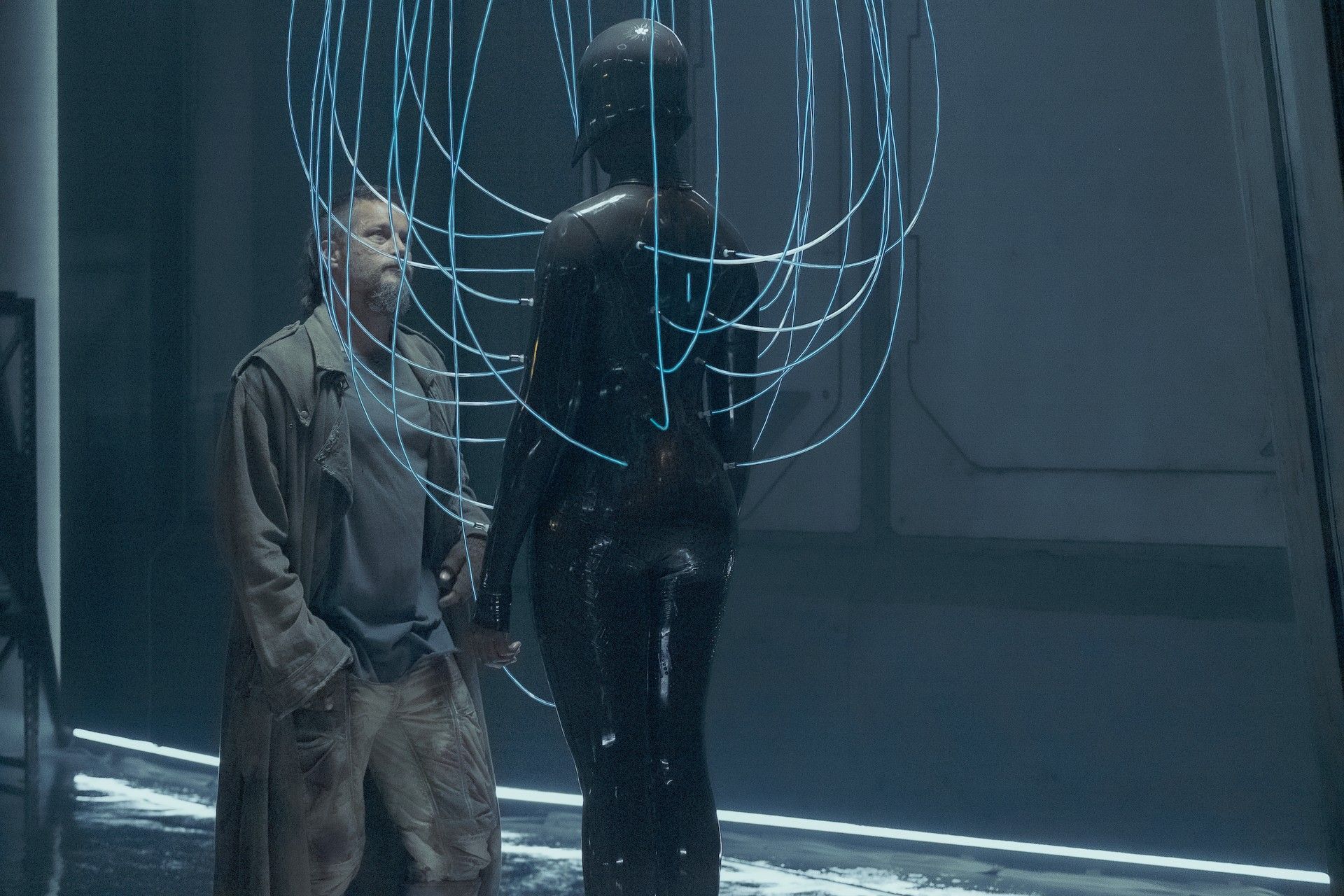
Ridley Scott has spent nearly five decades returning to the same fundamental question: What does it mean to be human when the world around us stops making sense? From the industrial nightmare of Alien to the neon-soaked existentialism of Blade Runner, Scott’s science fiction has always been interested in far more than spaceships and futuristic technology. His best work uses those elements to make humanity feel stranger, more fragile, and occasionally more precious. Now, news has emerged of an ambitious streaming project that would have combined elements from two of television’s most celebrated science fiction universes, only to be shelved before reaching audiences.
The canceled project, which was reportedly in development for a major streaming platform, has been described by industry insiders as a conceptual marriage between HBO’s Westworld and Scott’s own Blade Runner franchise. This two-part limited series would have explored themes of artificial consciousness, corporate dystopia, and the blurring boundaries between authentic human experience and manufactured reality. Sources close to the production suggest the project was well into pre-production before financial considerations and shifting streaming priorities led to its cancellation, leaving fans to wonder what might have been.
A Visionary Director’s Enduring Obsession with Humanity
Ridley Scott’s fascination with artificial life and existential questions dates back to his groundbreaking 1982 film Blade Runner, which itself was an adaptation of Philip K. Dick’s novel “Do Androids Dream of Electric Sheep?” The film introduced audiences to replicants—bioengineered beings virtually indistinguishable from humans—and posed uncomfortable questions about consciousness, memory, and what constitutes a soul. Though initially a commercial disappointment, Blade Runner grew into one of cinema’s most influential science fiction works, spawning a 2017 sequel directed by Denis Villeneuve and inspiring countless other productions.
Scott’s return to science fiction in recent years has demonstrated his continued interest in these philosophical territories. His work on the Alien prequel films Prometheus and Alien: Covenant delved into humanity’s origins and our relationship with our creators, while his executive production on the HBO Max series Raised by Wolves explored similar themes through the lens of androids raising human children on a distant planet. The canceled streaming project would have represented another chapter in this ongoing exploration, potentially pushing these ideas further than ever before.
The Westworld Connection and Streaming Landscape Challenges
The comparison to Westworld is particularly intriguing given that series’ own troubled history. HBO’s ambitious drama, created by Jonathan Nolan and Lisa Joy, ran for four seasons before its own cancellation in 2022 amid declining viewership and escalating production costs. The show explored a theme park populated by lifelike android “hosts” who gradually achieve consciousness, grappling with questions about free will, suffering, and the nature of reality. A project blending Westworld’s narrative ambitions with Blade Runner’s visual and thematic DNA would have represented a significant creative undertaking.
The cancellation reflects broader challenges facing streaming platforms in 2024 and 2025. After years of aggressive content spending, major streamers have pulled back significantly, canceling high-profile projects and implementing stricter budgetary controls. Science fiction productions, with their demanding visual effects requirements and elaborate set designs, have been particularly vulnerable to these cost-cutting measures. Industry analysts estimate that dozens of ambitious genre projects have been shelved across various platforms as the streaming wars enter a more fiscally conservative phase.
Scott’s Legacy and Future Projects
Despite this setback, Ridley Scott remains remarkably prolific at age 87. The director recently completed work on Gladiator II, returning to another of his celebrated franchises, and continues to develop multiple projects across various genres. His influence on science fiction cinema cannot be overstated—the visual language he established in Alien and Blade Runner continues to define how filmmakers approach dystopian futures and cosmic horror. From the “used future” aesthetic of lived-in spacecraft to rain-slicked urban hellscapes, Scott’s imagery has become the default vocabulary of cinematic science fiction.
While the two-part streaming series may never see the light of day, Scott’s exploration of artificial consciousness and human identity will undoubtedly continue through other venues. Hollywood’s relationship with ambitious science fiction remains complicated, balancing audience appetite for thought-provoking content against the financial realities of producing visually spectacular programming. For now, fans must content themselves with Scott’s existing catalog while hoping that elements of this mysterious project might eventually find their way into future works.
Expert Opinion: The cancellation of Scott’s ambitious streaming project signals a broader industry recalibration where prestige science fiction faces increasing scrutiny despite strong audience demand for intelligent genre content. As streaming platforms prioritize profitability over market share, we may see fewer high-concept projects greenlit, potentially pushing visionary filmmakers toward film rather than television formats. However, Scott’s proven track record suggests any shelved concepts will likely resurface in some form, as studios recognize the enduring commercial value of his science fiction vision.