
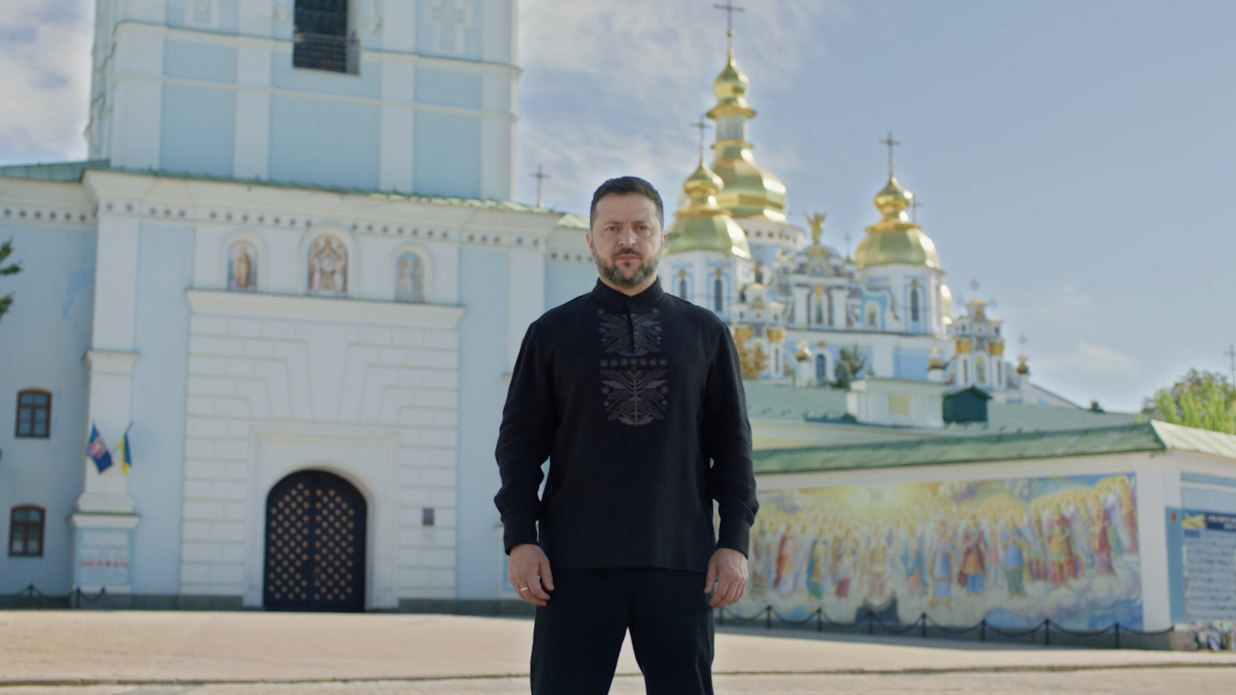
Ukrainian President Volodymyr Zelensky delivered a powerful Independence Day address on August 24, 2024, marking 33 years since Ukraine declared independence from the Soviet Union. In his speech, Zelensky touched on several critical topics including Russian mobilization efforts, Ukrainian military operations on Russian territory, and the ongoing struggle for sovereignty. The address came at a pivotal moment in the conflict, with Ukrainian forces having recently launched a surprising cross-border incursion into Russia’s Kursk region, dramatically shifting the dynamics of the war that has raged for over two and a half years.
The Flamingo Metaphor: A Message About Russian Soldiers
One of the most striking elements of Zelensky’s speech was his use of the flamingo metaphor when discussing Russian mobilization. The president suggested that Russian soldiers, whom he referred to as “flamingos,” should remain within Russia’s borders rather than being sent to fight in Ukraine. This colorful imagery served as both a critique of Russia’s ongoing military mobilization and a pointed message about the consequences awaiting those who continue to invade Ukrainian territory. The metaphor resonated deeply with Ukrainian audiences, who have grown accustomed to Zelensky’s ability to communicate complex geopolitical situations through memorable and often sardonic language.
The reference to “wintering in Russia” carries additional significance given the harsh conditions that have historically affected military campaigns in the region. Throughout history, from Napoleon’s disastrous 1812 invasion to the brutal winters of World War II, the Russian winter has proven devastating for invading armies. Zelensky’s inversion of this historical pattern—suggesting that Russian soldiers themselves should experience these conditions rather than bringing war to Ukrainian soil—represents a psychological shift in the conflict’s narrative. Ukrainian forces have demonstrated remarkable resilience through multiple winters of warfare, and the president’s words reflect a growing confidence in Ukraine’s military capabilities.
Ukrainian Operations on Russian Territory
Perhaps the most consequential portion of Zelensky’s address dealt with Ukrainian military operations conducted on Russian soil. The president openly acknowledged and defended Ukraine’s cross-border incursions, particularly the ongoing operation in Russia’s Kursk region that began in early August 2024. This operation marked the first time since World War II that a foreign military force had seized and held Russian territory, representing a dramatic escalation and a significant psychological blow to the Kremlin. Zelensky framed these operations as necessary defensive measures, arguing that Ukraine has every right to strike at the sources of aggression threatening its people and infrastructure.
The Kursk operation has captured international attention and sparked intense debate among military analysts and diplomatic observers. Ukrainian forces managed to advance several kilometers into Russian territory, capturing numerous villages and reportedly taking hundreds of Russian prisoners of war. Military experts have noted that the operation serves multiple strategic purposes: it diverts Russian forces from other fronts, provides potential leverage in future negotiations, creates a buffer zone to protect Ukrainian border communities from constant shelling, and demonstrates to Western allies that Ukrainian forces remain capable of offensive operations despite the grinding nature of the conflict.
Independence Day: Historical Significance and Modern Challenges
Ukraine’s Independence Day carries profound historical weight, commemorating the country’s declaration of sovereignty on August 24, 1991, as the Soviet Union crumbled. This year’s celebration occurred under the shadow of war, yet Zelensky used the occasion to reinforce national unity and resolve. The president drew connections between the struggle for independence in 1991 and the current fight against Russian aggression, emphasizing that true sovereignty must be continuously defended. He reminded Ukrainians that their ancestors dreamed of independence for centuries, and that the current generation bears the responsibility of securing it permanently.
The president’s address also touched on the international dimension of Ukraine’s struggle, expressing gratitude to allied nations for their continued military, financial, and humanitarian support. Since Russia’s full-scale invasion began in February 2022, Ukraine has received unprecedented levels of Western assistance, including advanced weapons systems, economic aid, and diplomatic backing. Zelensky emphasized that this support, combined with Ukrainian courage and determination, has prevented Russia from achieving its initial objectives of quickly conquering the country. However, he also acknowledged the immense sacrifices made by Ukrainian soldiers and civilians alike, honoring those who have given their lives in defense of their homeland.
Expert Opinion: The Kursk operation represents a significant evolution in Ukrainian military strategy, demonstrating Kyiv’s willingness to take calculated risks to reshape the battlefield dynamics. As the conflict enters its third year, Ukraine’s ability to maintain offensive capabilities while defending vast territories suggests the war will likely continue as a protracted struggle with neither side achieving decisive victory in the near term. International support and domestic resilience will remain the critical variables determining Ukraine’s long-term position in any eventual negotiations.